Printed T-shirts are useful for far more than giveaways. Dubai companies use them for event teams, warehouse staff, promotional campaigns, casual uniforms, product launches, sports days, exhibitions and short-term project crews. Because the garment looks simple, buyers sometimes focus only on the unit price and logo. In practice, fabric, fit, colour, print method, artwork size and order structure have a major effect on how professional the finished shirt looks. A good bulk order starts by defining the purpose. A one-day event shirt can prioritise budget and visual impact, while a staff T-shirt worn every week needs better fabric comfort, wash performance and consistent sizing.
The branding method should follow the artwork and use case rather than being selected only because one option sounds newer or cheaper.
Choose the T-Shirt for the Job
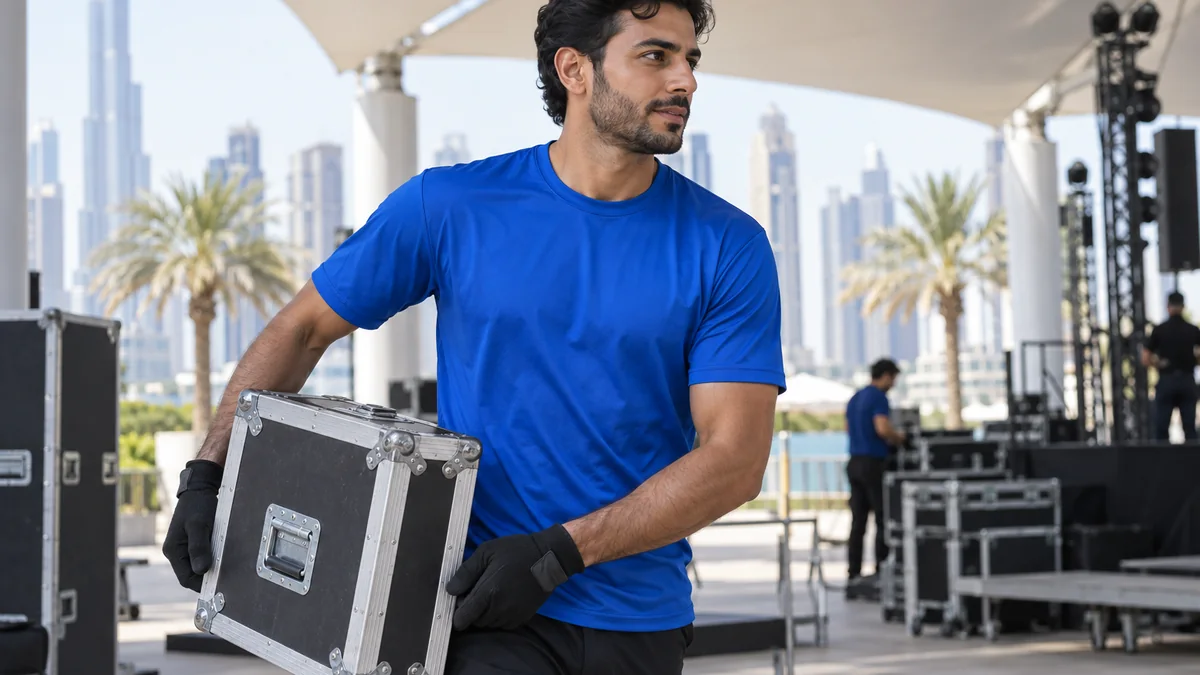
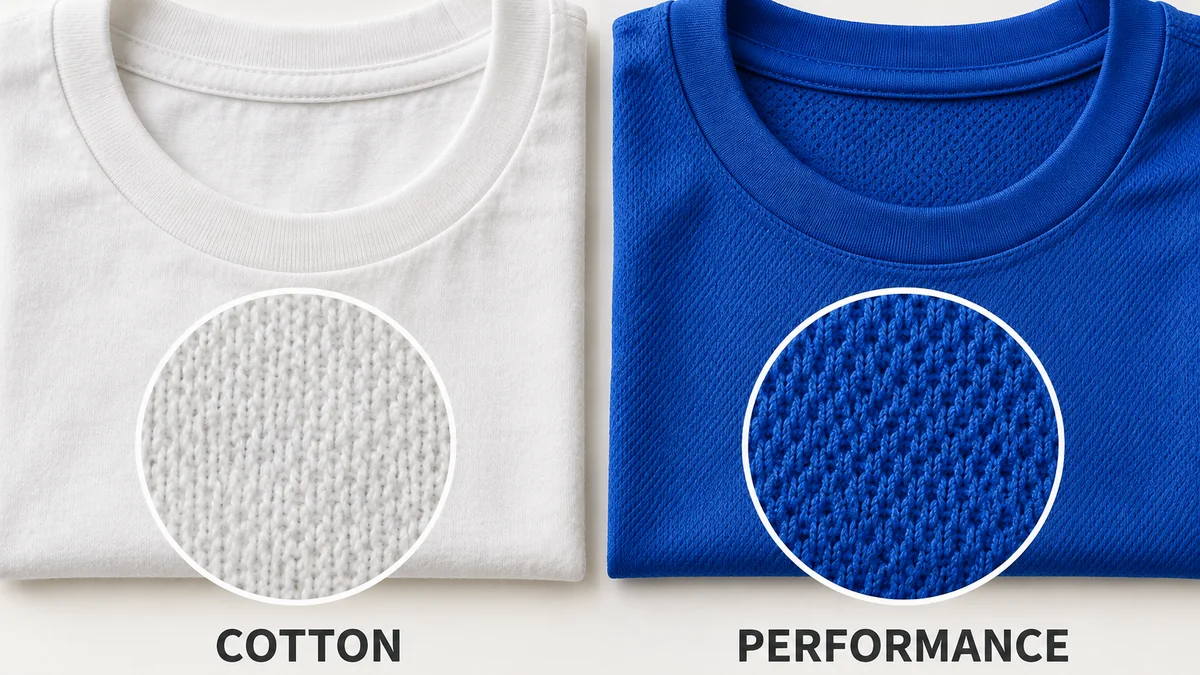
Cotton is a familiar choice for casual staff wear, events and customer-facing teams because it feels comfortable and works well with many print methods. Polyester or performance T-shirts can be more practical for active teams, outdoor work or situations where quick drying matters. Blended fabrics can offer a middle ground between comfort, shape retention and maintenance. Fabric weight also influences the result. A very light shirt may feel suitable for giveaways but less structured as a staff uniform. A heavier shirt can look more substantial but may feel warmer outdoors.
If the team will work in Dubai heat, consider the actual environment, whether staff are inside or outside, and how long they will wear the shirt each day.
When DTF Printing Makes Sense
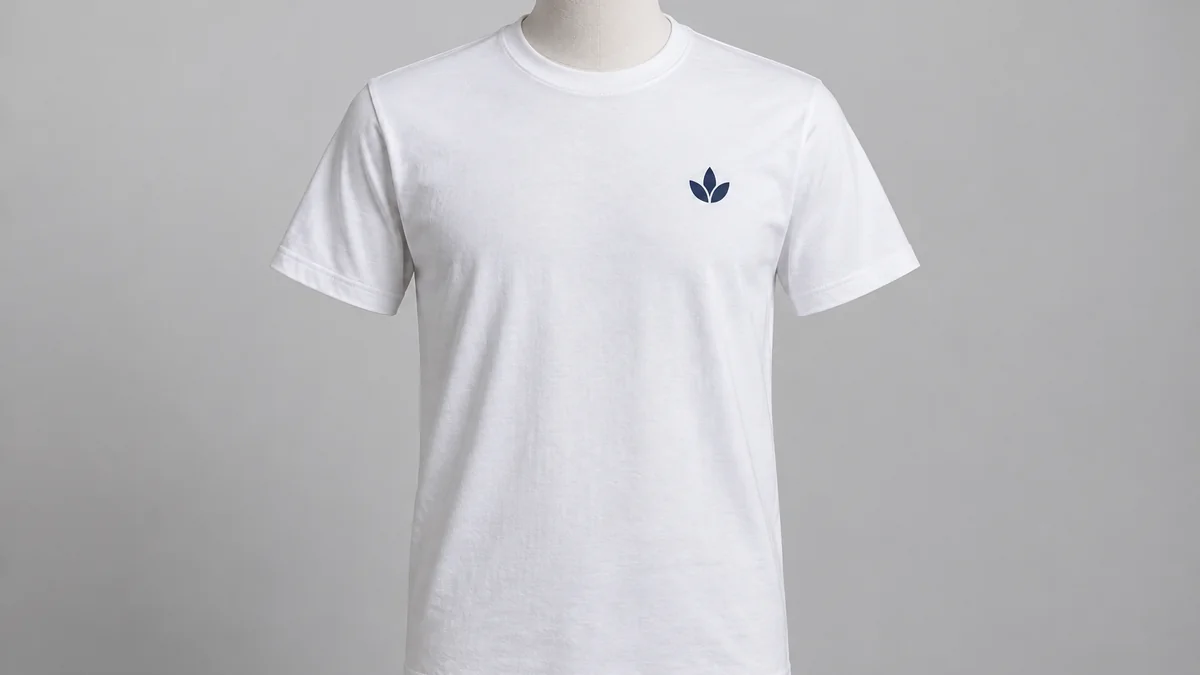
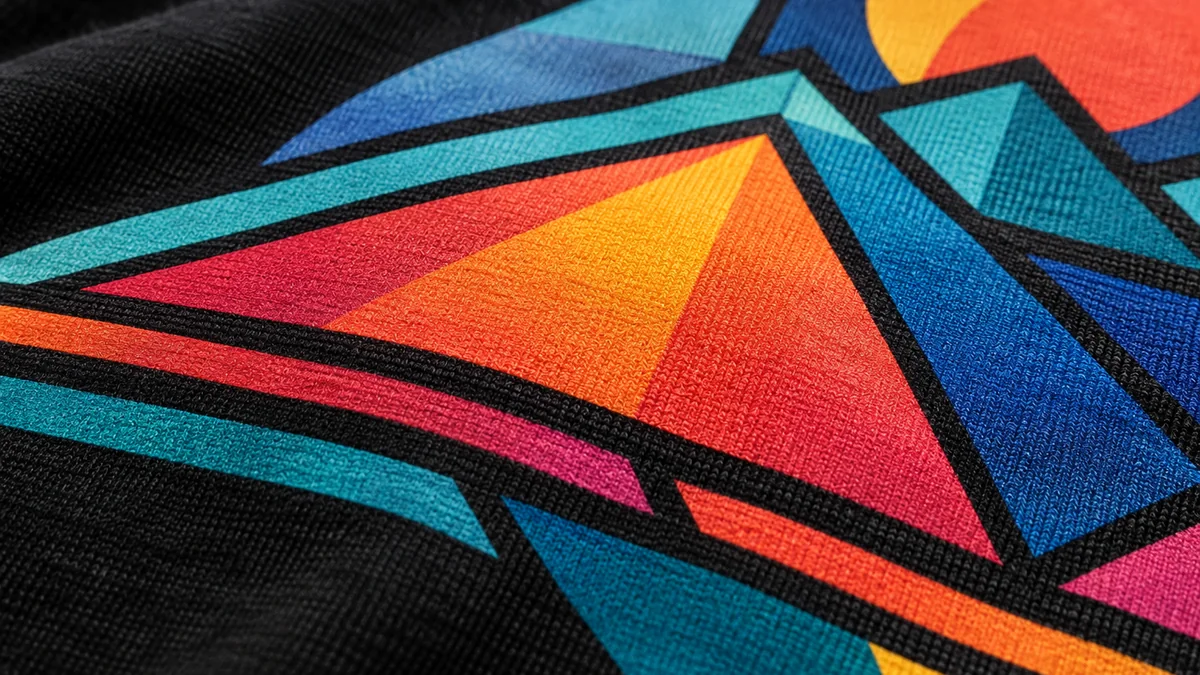
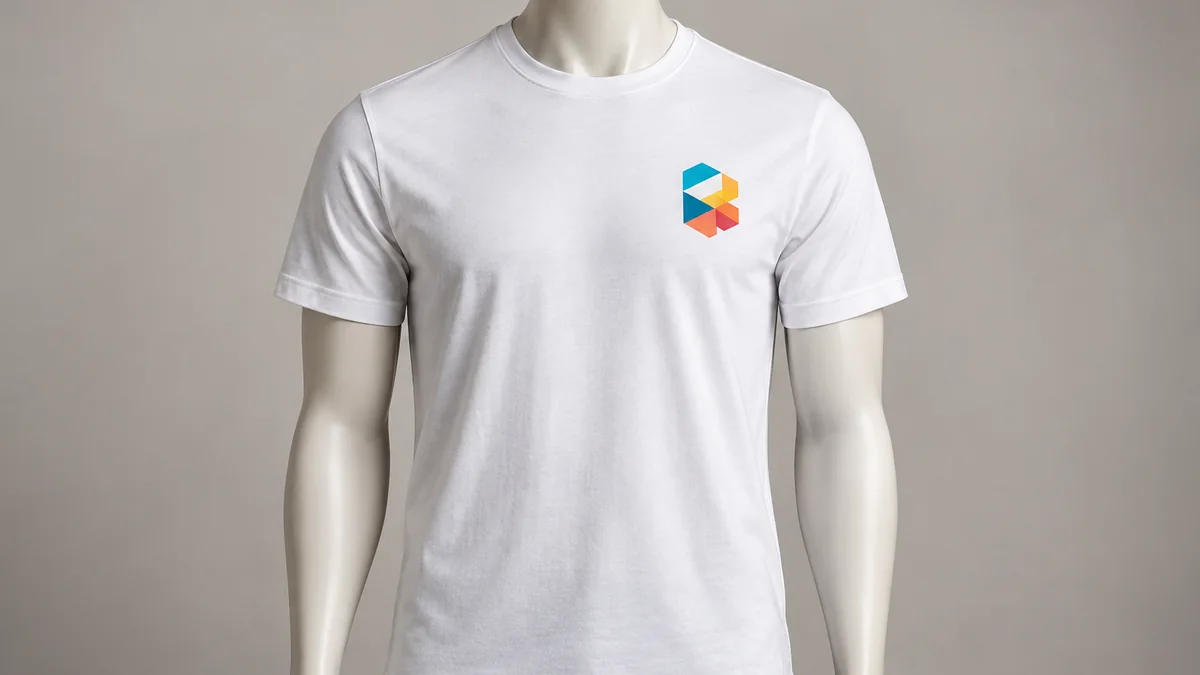
DTF printing is useful when a design contains multiple colours, fine detail or artwork that would be difficult to reproduce economically with embroidery. It can work well for chest logos, sleeve marks, larger back graphics and event artwork. Because the transfer is applied to the garment surface, print quality depends on both the artwork preparation and the correct pressing process. For company uniforms, avoid treating the largest possible print as the best print. A compact chest logo often looks cleaner for daily staff wear, while a larger back design is useful when people need to identify the team from a distance.
For promotional T-shirts, a bigger visual may be appropriate, but the print should still sit comfortably and avoid excessive stiffness.
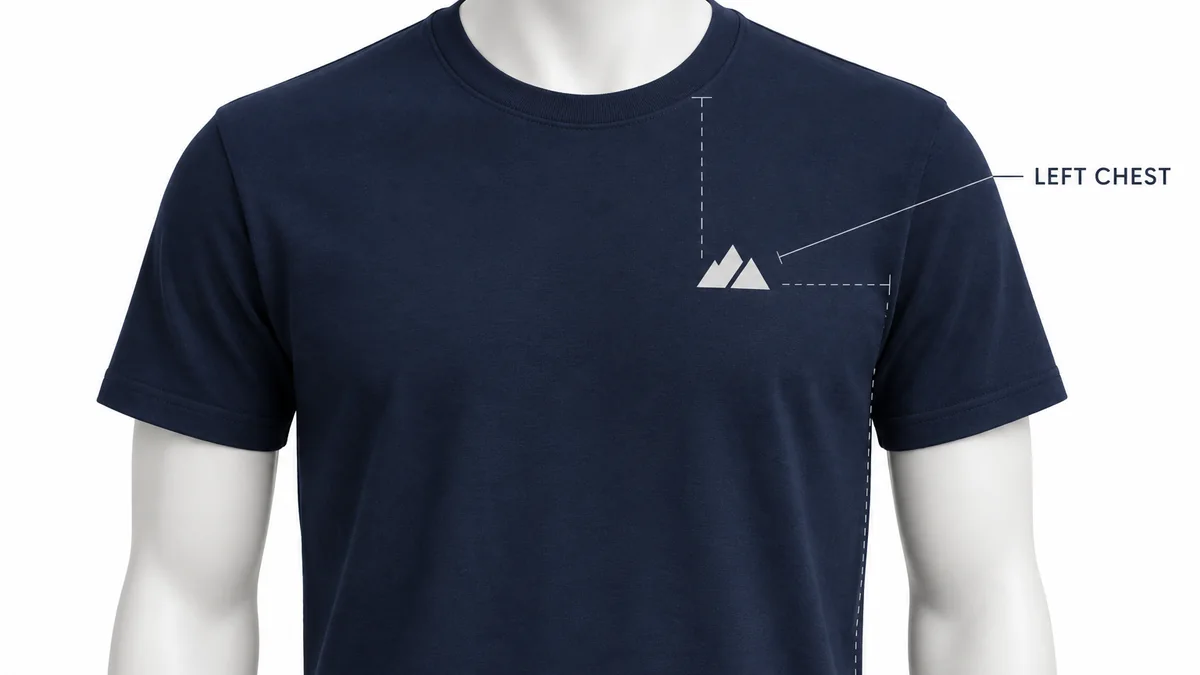
Logo Placement for Staff and Event T-Shirts
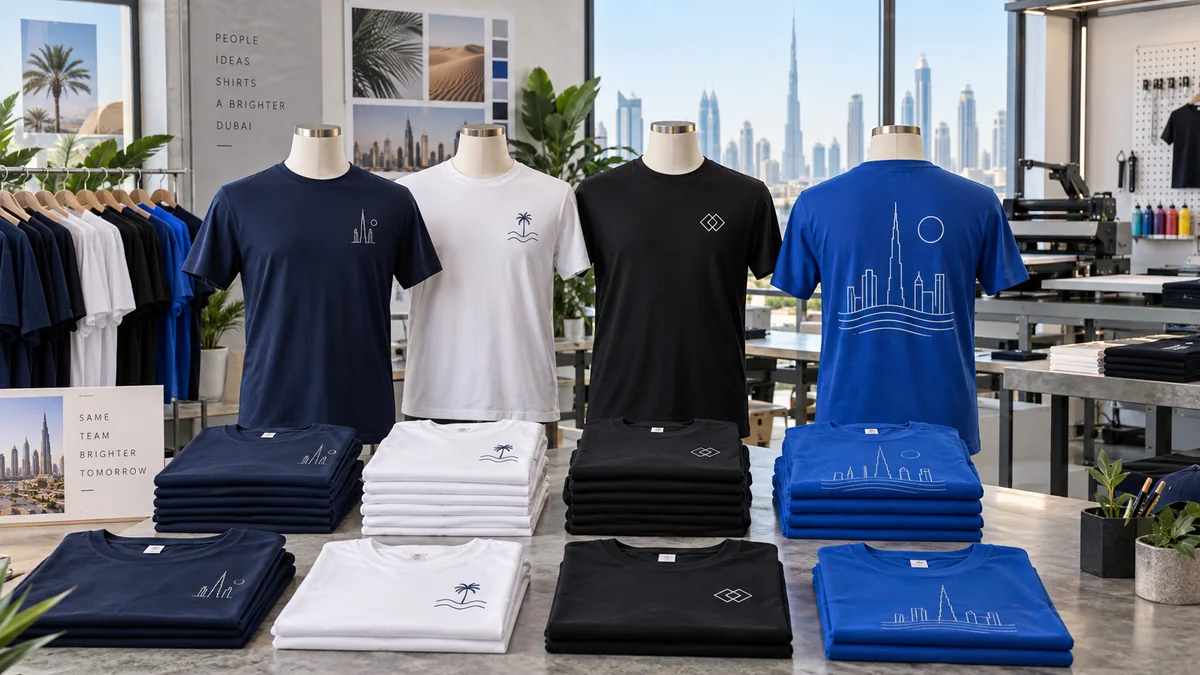
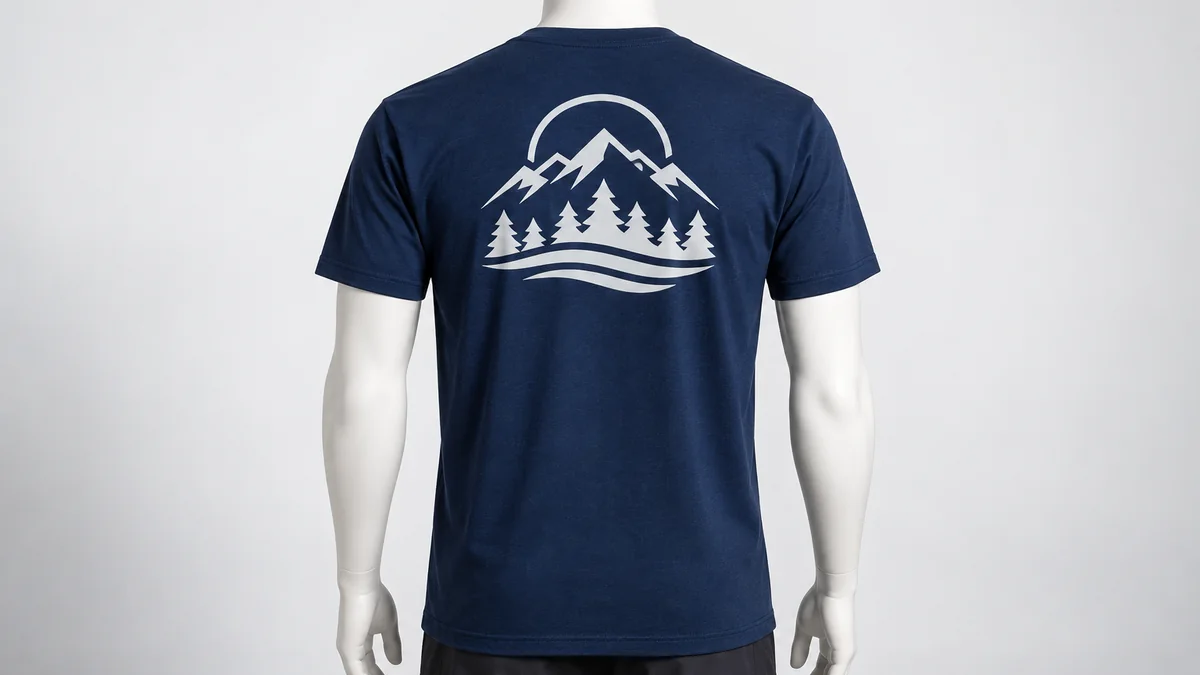
The left chest is a common company-logo position because it feels professional and remains visible in normal conversation. A centred front print is better for promotional graphics or event branding. The back can carry larger text, campaign messaging, contact details or a second logo, while sleeves can hold a small partner mark or flag. Before production, ask for a mockup that shows the logo at a realistic size. Do not approve artwork based only on a close-up view. The design should be judged in proportion to the full shirt.
Also confirm whether the same print dimensions will be used across all sizes or adjusted for very small and very large garments.
Colours: Garment, Logo and Contrast
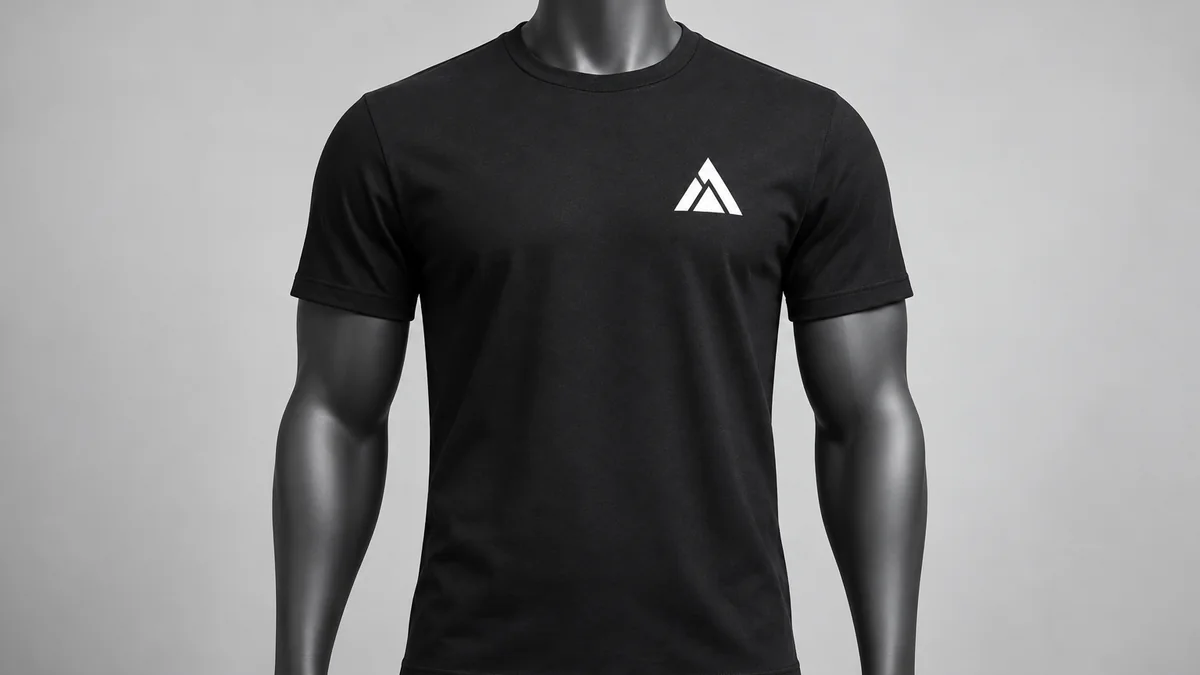
Black, white, navy, grey and royal blue are reliable corporate colours, while brighter shirts can work well for events or promotional teams. The shirt colour should support the company identity but also suit the work environment. White looks clean but shows marks quickly; dark colours are practical but can feel warmer outdoors. Prepare the logo for the actual garment colour. A dark logo can disappear on navy or black, while a white version can lose impact on a light shirt. If the order includes multiple shirt colours, approve each colour combination.
This is especially important for multicolour DTF artwork, where the same design can look visually different against different backgrounds.
Sizing and Quantity Planning for Bulk Orders
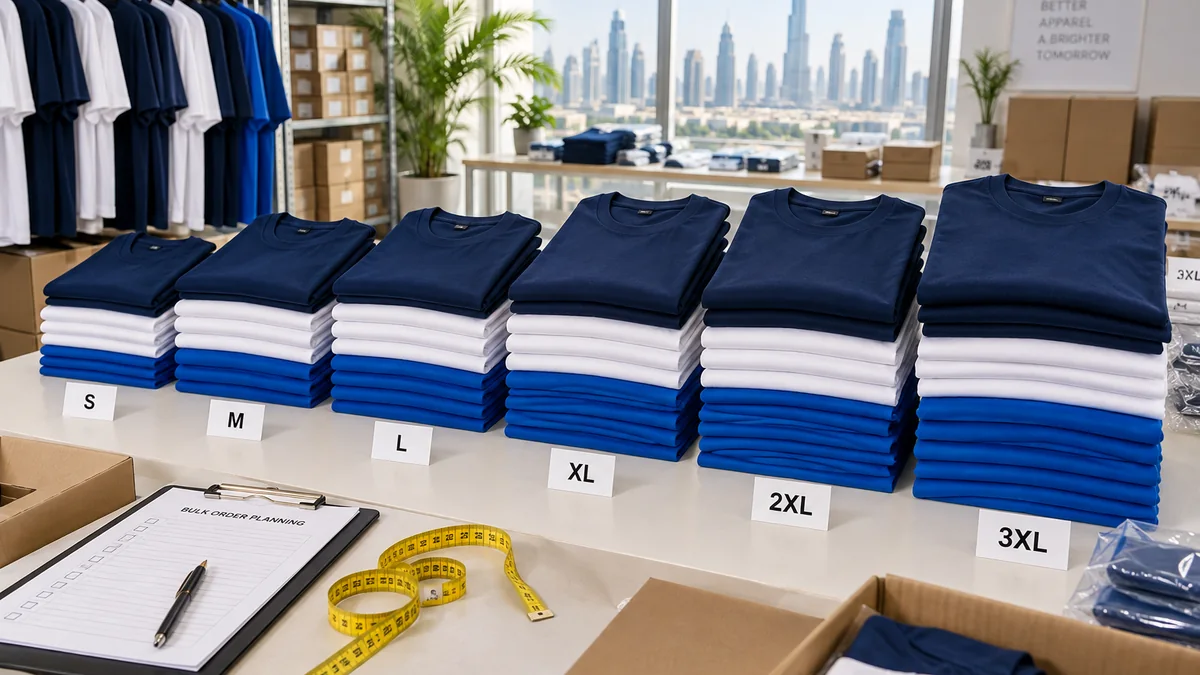
Collect the size split before production rather than ordering a large quantity of mixed sizes and hoping the ratio works. For staff uniforms, use the supplier's size chart and consider a fitting sample if the order is large. Event orders may need a broader mix because exact attendee sizing is unknown, but the buyer should still plan the ratio based on the expected audience. Allow a small buffer for replacements, new joiners or last-minute event staff when the budget permits. Record the approved T-shirt model, colour, print dimensions and artwork version so repeat orders match the first batch.
This is especially useful when the company runs recurring events or seasonal campaigns.
What Affects the Cost of Printed T-Shirts?
The final cost is influenced by garment quality, fabric type, quantity, number of print positions, artwork size and any personalisation. A simple one-position company logo is usually more straightforward than front, back and sleeve branding. Names, numbers or unique prints per shirt should be declared at quotation stage because they change production handling. Very low unit pricing is not useful if the shirt fabric, sizing or print is unsuitable for the intended use. Compare quotations on the same specification: shirt type, fabric, colour, quantity, print positions and delivery.
This makes it easier to see whether one supplier is genuinely better value or simply quoting a different product.
Ordering for Dubai Events and Company Deadlines
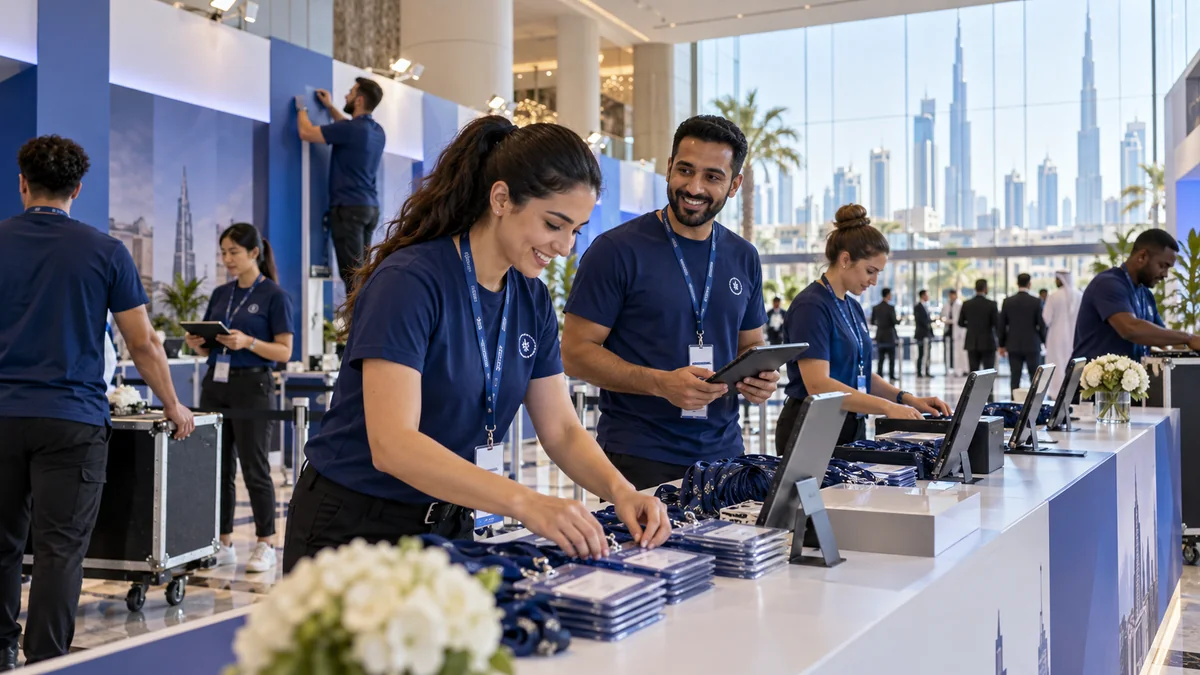
Dubai event and corporate orders often have fixed dates. Exhibition opening, campaign launch, staff induction or client activation deadlines cannot easily move because the shirts are late. Confirm stock availability, artwork approval cut-off and delivery date before you place the order. If several shirt colours or sizes are required, check whether the full quantity is available together. Send the supplier a complete brief: quantity, shirt colour, size split, fabric preference, logo file, print positions and required delivery date. For event work, include the event date as well as the requested delivery date so there is enough margin for sorting and distribution.
Need printed T-shirts for staff or an event?
Send the quantity, shirt colour, size split, artwork, print positions and deadline for a mockup and Dubai/UAE quotation.
Frequently asked questions
Is DTF printing suitable for company T-shirts?
Yes. DTF can reproduce detailed multicolour artwork for many chest, back and sleeve applications when paired with a suitable garment and pressing process.
Should company T-shirts use cotton or polyester?
Cotton suits many indoor and casual uses, while polyester or performance fabrics can suit active teams. Compare samples for the intended environment.
What is the best logo position on a staff T-shirt?
A left-chest logo is a common professional choice. Larger back prints improve identification from a distance, and centred graphics suit campaigns and events.
Can I print different names or numbers on each shirt?
Yes, but personalisation changes production handling and pricing. Declare all unique names, numbers or roles at quotation stage.
How should I prepare artwork for T-shirt printing?
Send vector artwork where possible or a high-resolution transparent PNG, then approve the print dimensions and garment colour on a mockup.