Safety helmets are functional PPE first, but on active UAE sites they also serve as one of the clearest ways to identify a company, subcontractor or job role. A well-placed logo can make a crew easier to recognise during inspections, inductions, visitor management and day-to-day site coordination. For contractors ordering in volume, branded helmets can also make the overall uniform package look more consistent when combined with reflective vests and workwear. The important point is to treat branding as a controlled addition to the helmet, not as decoration that interferes with the product.
Helmet model, shell colour, available print area, logo dimensions, artwork quality and the supplier's approved printing method should all be confirmed before production. Buyers should also keep the helmet's safety purpose separate from the branding decision: the required helmet specification must be selected first, then the logo should be applied within suitable areas.
Start With the Helmet Requirement, Not the Logo
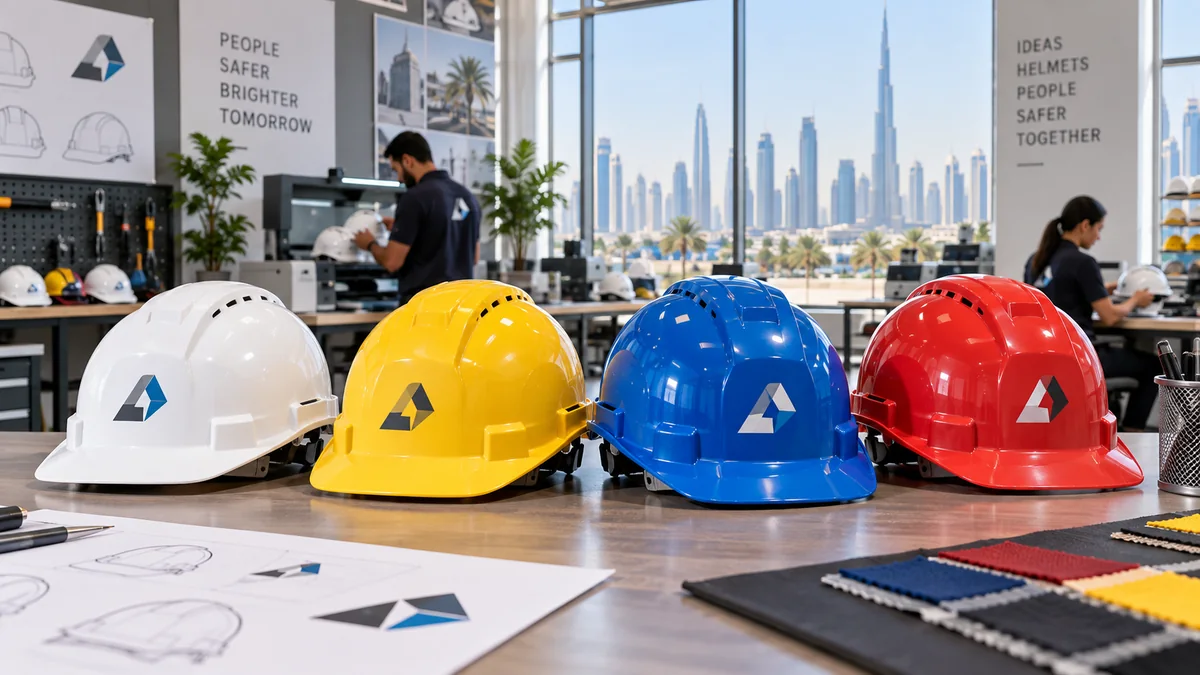
Before discussing printing, confirm the type of helmet your workforce needs. Construction, fit-out, maintenance, warehousing and industrial environments can have different requirements, and some projects specify particular helmet standards or accessories. If chin straps, face shields, earmuffs or other compatible attachments are needed, confirm those details at quotation stage rather than after the helmet has already been branded. For purchasing teams, this prevents a common problem: approving an attractive mockup on the wrong helmet model. A branded helmet that cannot meet the site's operational requirement is not useful.
Ask the supplier for the exact model, colour availability, size adjustment system and relevant product information before signing off on artwork.
Helmet Colours and Role Identification
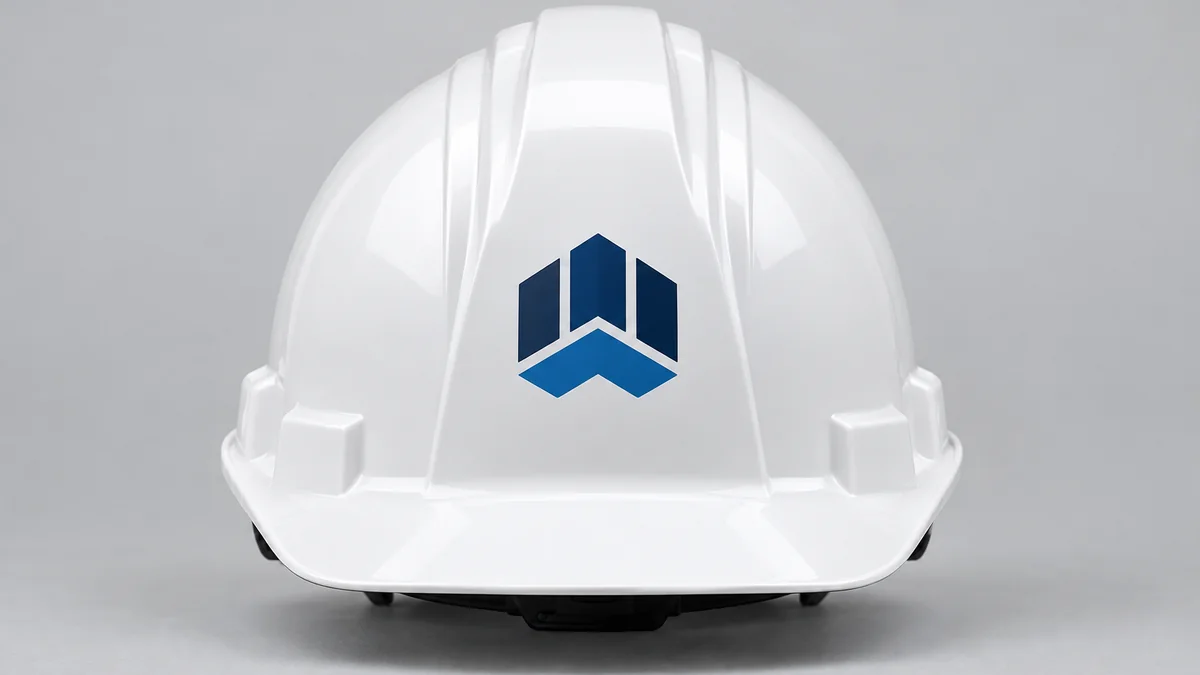
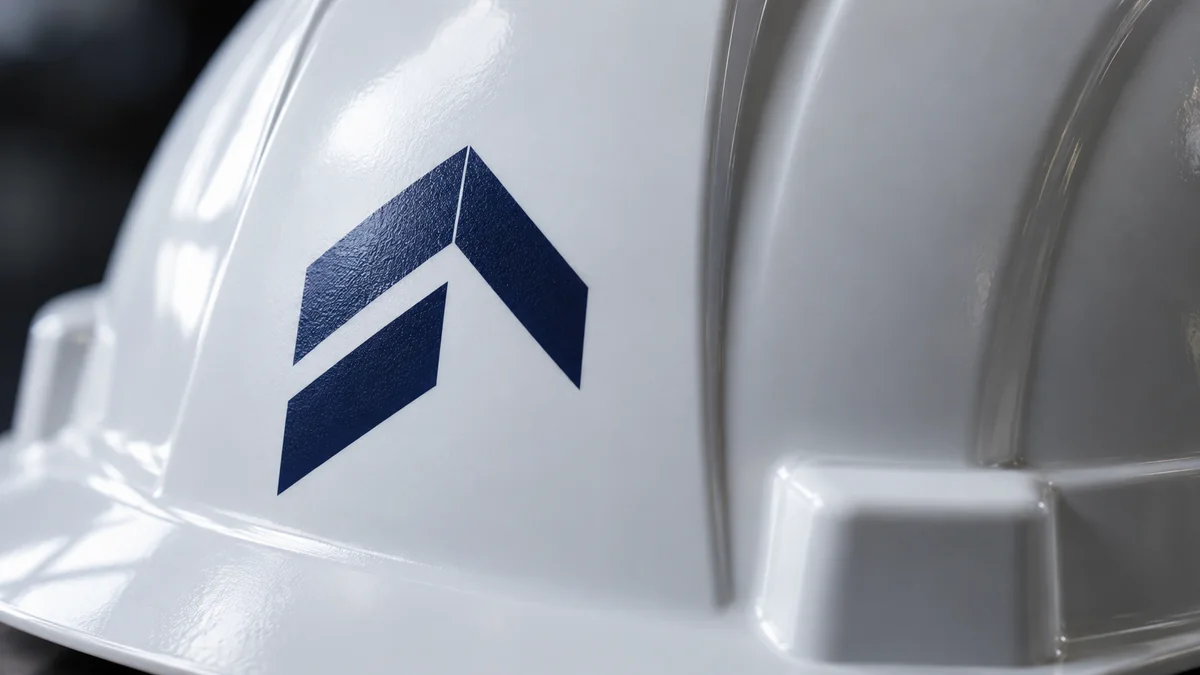
White, yellow, blue, red, green and orange helmets are commonly used across many projects, but colour meanings can vary from one contractor or site to another. Some companies use different colours for engineers, supervisors, labour, visitors, safety staff or specialist trades. If your project already has a colour code, provide it with the purchase request so the supplier does not assume a generic convention. Brand visibility changes with shell colour. A dark company logo can look sharp on white or yellow, while a white or light-colour version may be needed on navy, red or other dark shells.
If you are ordering several helmet colours, prepare approved light-background and dark-background versions of the logo. This keeps the brand readable without changing the core identity.

Best Logo Placement on a Safety Helmet
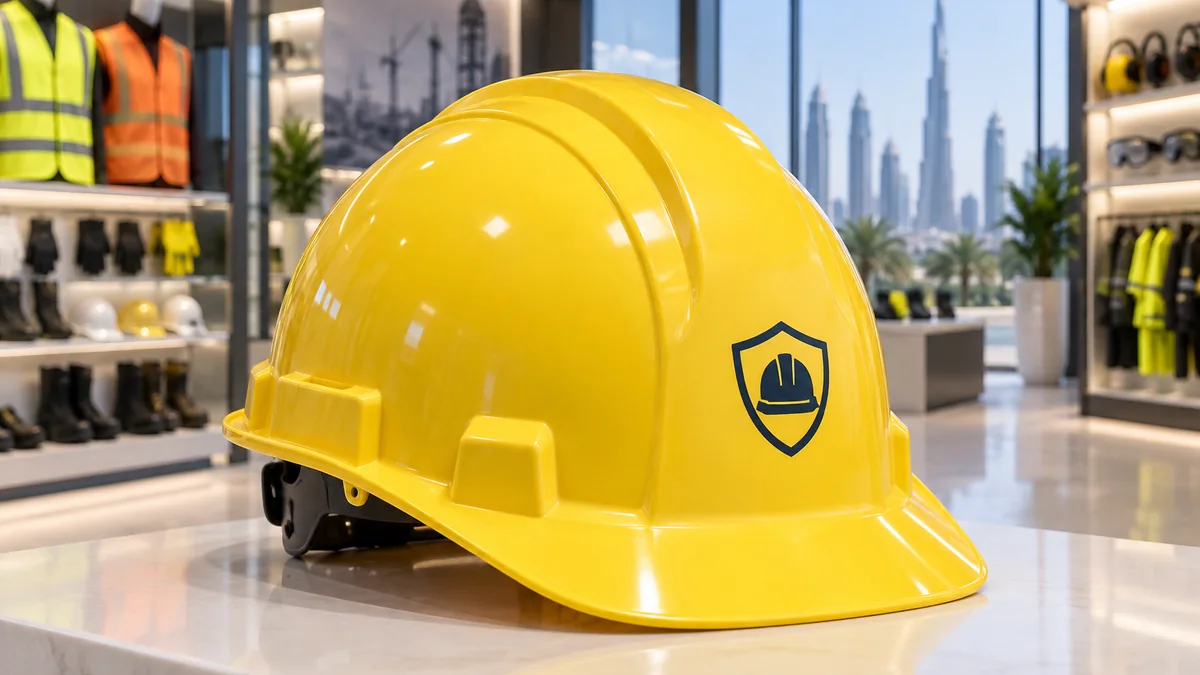
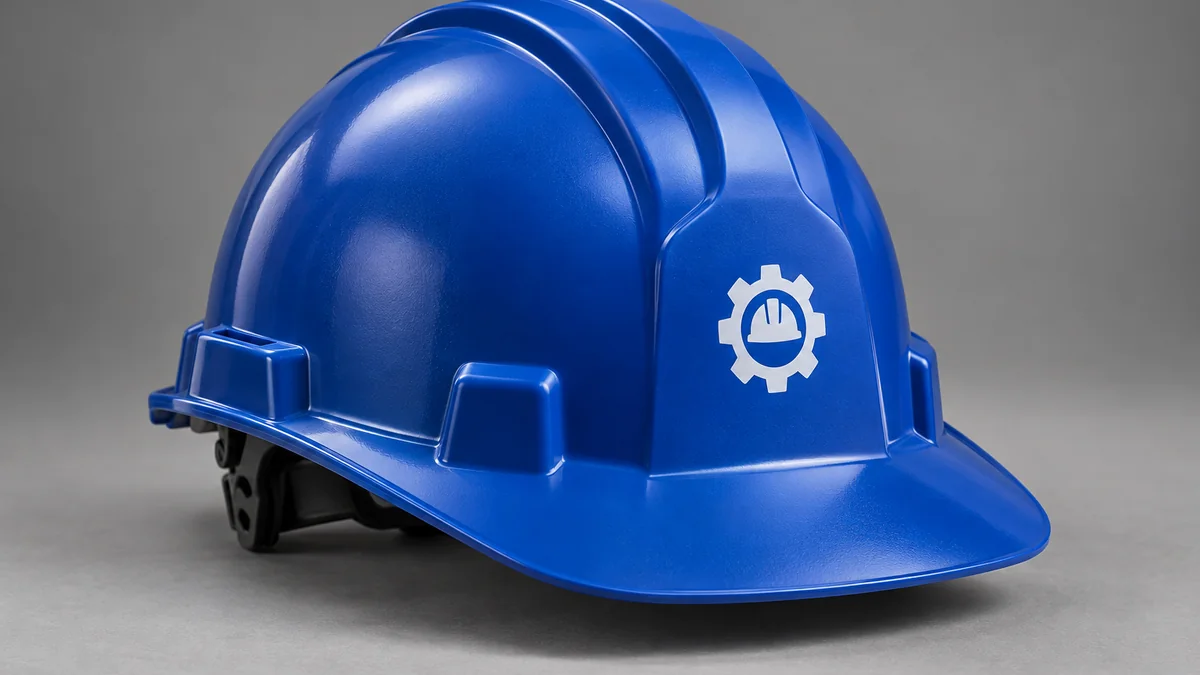
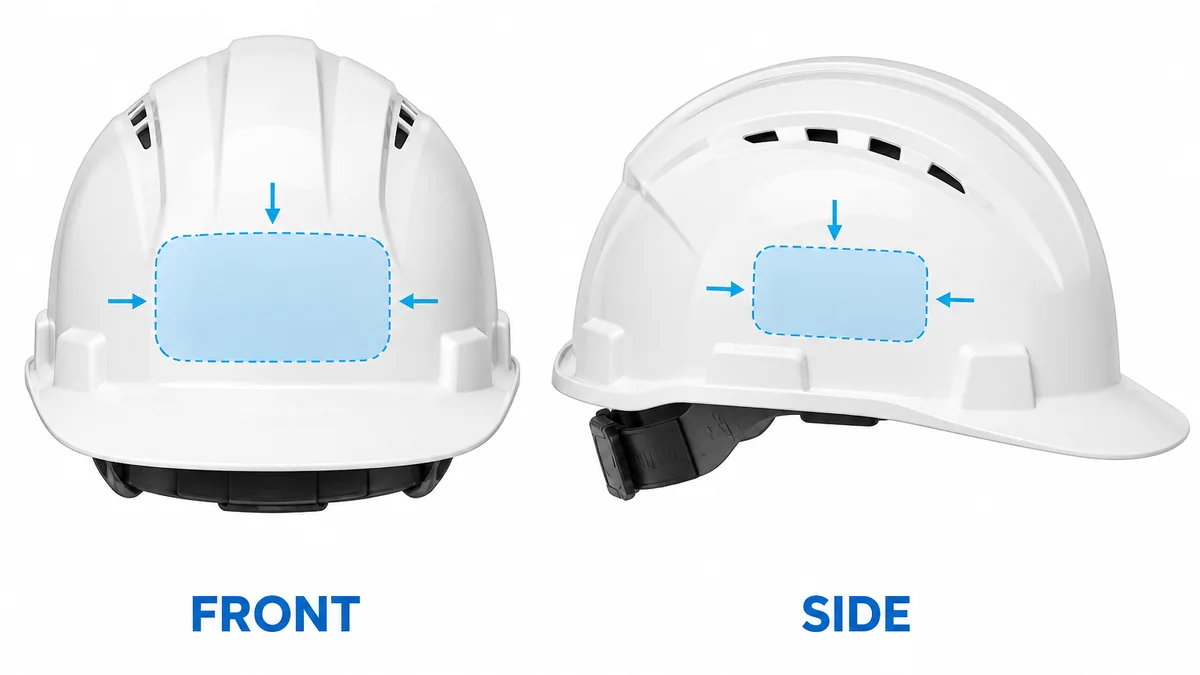
The front is the most common branding position because it is easy to see during face-to-face interaction. Depending on the helmet shape and available print area, a logo may also be placed on the sides or rear. The correct size should follow the shell's smooth printable zone rather than being stretched across ridges, vents, moulded details or curved areas that distort the artwork. For company identification, a single front logo is often enough. Larger contractors may add a secondary mark, project name or department identifier, but too much information can make the helmet look cluttered.
Keep essential safety labels and manufacturer markings visible, and do not cover information that the site team may need to inspect.
Artwork Quality and Print Readability
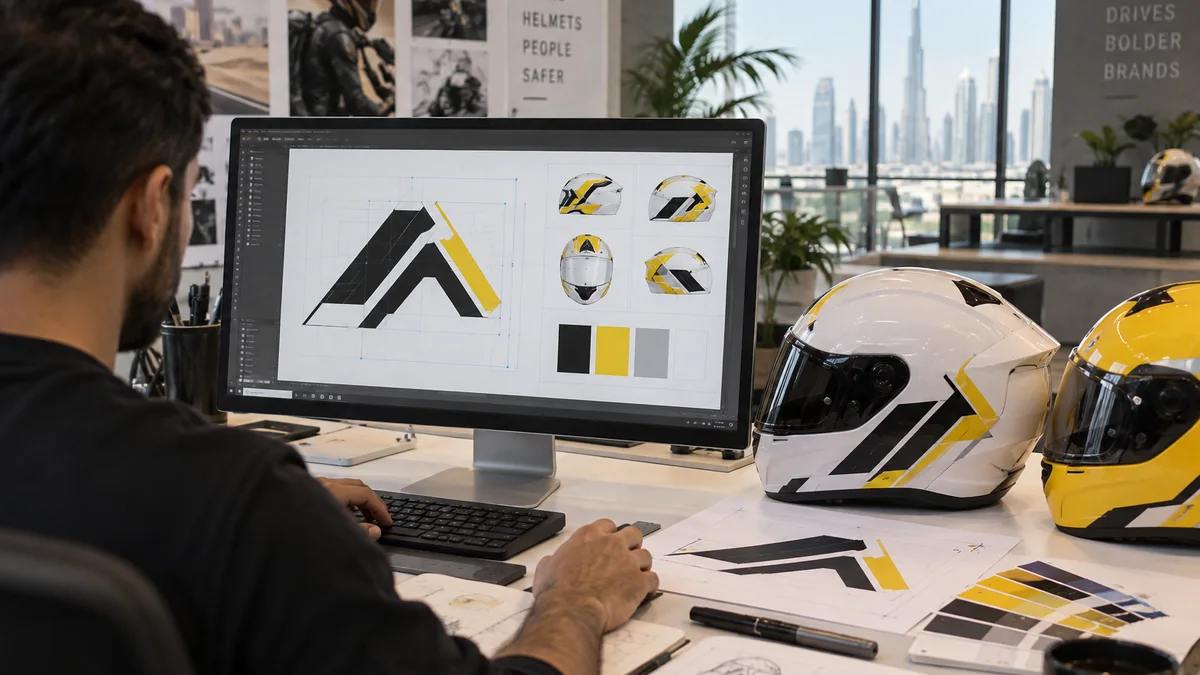
Helmet logos are usually viewed from a short distance, so fine text can disappear quickly. Simplified artwork normally performs better than a complex design reduced to a very small size. If the company logo contains a tagline, registration text or thin lines, request a proof at the actual intended dimensions before production. A vector file is the best starting point because it can be scaled cleanly. A high-resolution transparent PNG can also be suitable for some workflows. Avoid WhatsApp screenshots, low-resolution JPEGs or logos copied from social media profiles.
These may look acceptable on a phone screen but produce soft edges or unreadable text when converted for printing.
What to Confirm Before Bulk Production
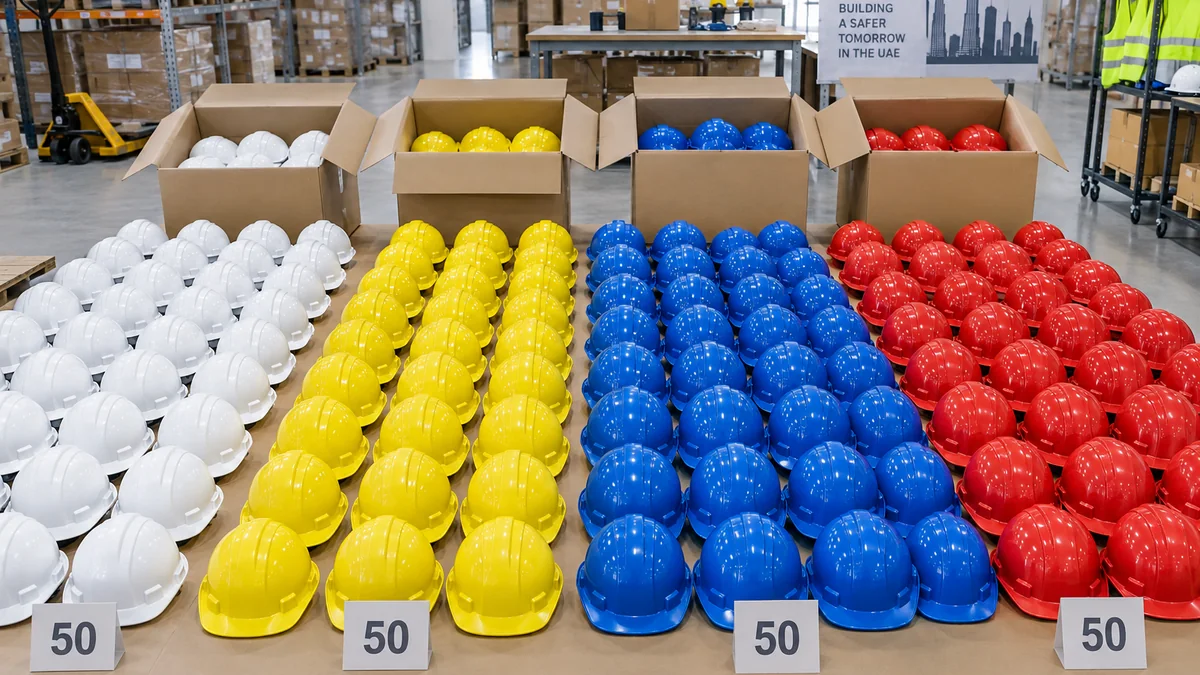
Ask for a mockup showing the exact helmet colour and approximate logo position. If several colours are included, review each colour combination rather than approving only one. The same logo can look very different on white, yellow and red shells. For large orders, a physical sample can be valuable when brand consistency matters. Confirm quantity by colour, required accessories, delivery location and deadline in the same quotation request. If the project needs names, numbers or role labels, specify whether these are identical across the batch or personalised.
Personalisation changes the production process and should be priced and planned separately.
Ordering for Dubai and UAE Project Timelines
Construction and fit-out orders in Dubai are often connected to mobilisation dates, new labour arrivals, client inspections or site access deadlines. Stock availability therefore matters as much as the print itself. Before promising a delivery date internally, confirm that the required helmet colours and quantities are physically available or have a realistic lead time. For projects outside Dubai, build delivery time into the schedule and avoid approving artwork at the last minute. A simple purchasing checklist - model, colour split, quantity, logo file, print positions, accessories, delivery location and deadline - makes the order much easier to process accurately.

Pair Helmets With the Rest of the Site Uniform
Branded helmets are more effective when they form part of a consistent site kit. Reflective vests can carry larger front-and-back branding, while uniforms can use embroidery or print for permanent staff identification. If the same workforce needs helmets, vests and workwear, buying the items as one coordinated package can make colours and logo usage more consistent.
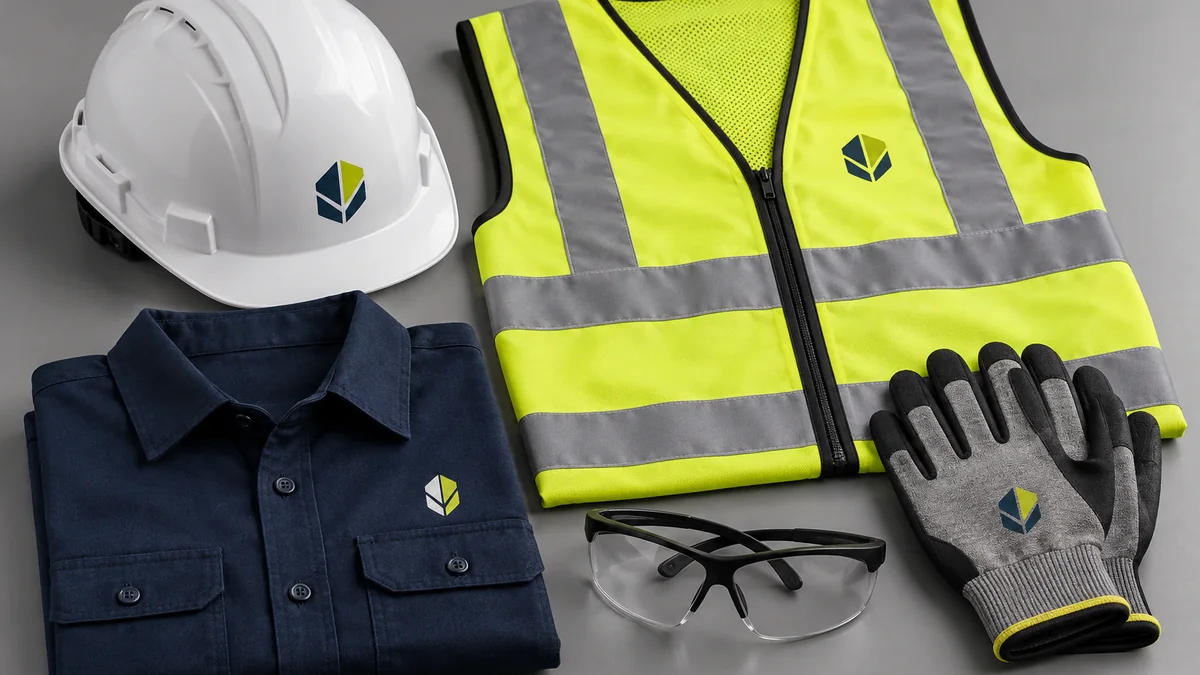
Need safety helmets with your company logo?
Send the helmet quantity, colour split, logo file, print position, accessories and delivery deadline for a mockup and quotation.
Frequently asked questions
Can a company logo be printed on the front of a safety helmet?
Yes, when the model has a suitable printable area and the approved branding method is appropriate. Keep the logo clear of labels, vents and moulded details.
Which helmet colour is best for a company logo?
Select the helmet colour for the site requirement first, then use a logo version with enough contrast on that shell.
Can different job roles use different helmet colours?
Yes, but colour meanings vary by project. Follow the system defined by the contractor, client or site policy.
What logo file should I send for helmet printing?
Vector artwork is preferred. A high-resolution transparent PNG may also work; avoid screenshots and small compressed files.
Can helmets be ordered together with branded safety vests?
Yes. Coordinating helmets, vests and workwear helps maintain consistent team identification across the site kit.