Coveralls are used across construction, maintenance, engineering, workshops, warehouses and industrial sites in the UAE. They may look like a simple one-piece garment, but the correct specification can make a major difference to comfort, durability and replacement cost.
The two details buyers should understand first are fabric composition and GSM. From there, you can decide whether the coverall needs reflective tape, extra pockets, special colours or company branding. Xpertone Creative LLC-FZ supplies workwear and coveralls in Dubai for trade and business orders.
When sourcing industrial coveralls in Dubai or the UAE, compare coverall fabric GSM, cotton or polyester-blend composition, reflective tape, pocket design, sizing and logo branding. This guide helps procurement teams evaluate those specifications before requesting a coverall supplier quotation.
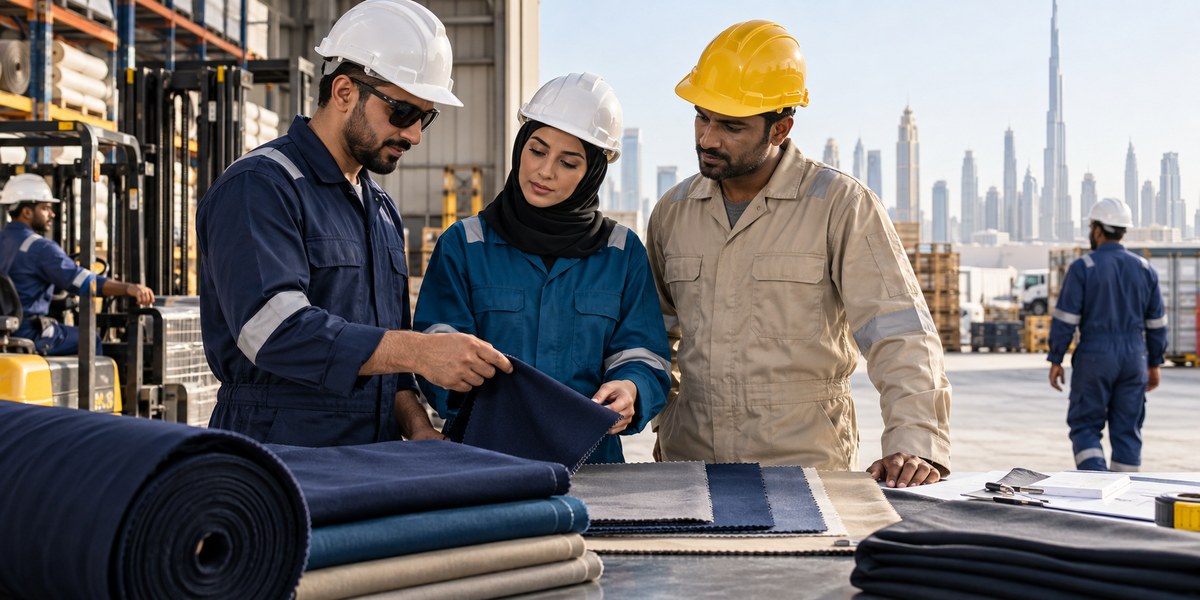
What does GSM mean in coverall fabric?
GSM means grams per square metre. It is a measure of fabric weight, not a complete quality score. A 260 GSM coverall will generally feel heavier than a 190 GSM coverall, but the final performance also depends on the weave, fibre composition, stitching and garment construction.
For UAE conditions, heavier is not always better. Outdoor teams often work in high temperatures, so comfort matters. At the same time, a very light fabric may not last as long under abrasive or mechanical work. The right choice is the lightest specification that still meets the durability and safety needs of the job.
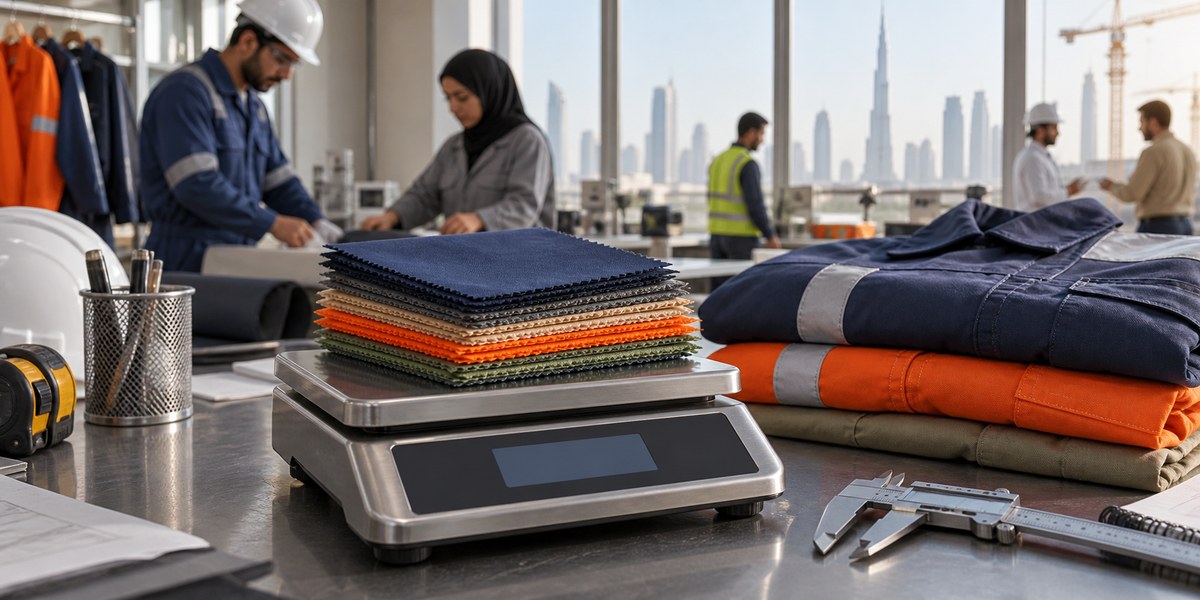
190 GSM vs 200 GSM vs 260 GSM: how to think about it
These figures are common reference points in workwear. Around 190–200 GSM can provide a useful balance for general uniforms where movement and heat comfort matter. Heavier fabrics around 240–260 GSM may be chosen where buyers prioritize robustness, structure or a more substantial feel.
Instead of choosing by number alone, ask: How often will the coverall be worn? How often will it be washed? Is the worker indoors or outdoors? Does the job involve rough surfaces, grease, tools or frequent kneeling? The answers matter more than chasing the highest GSM.
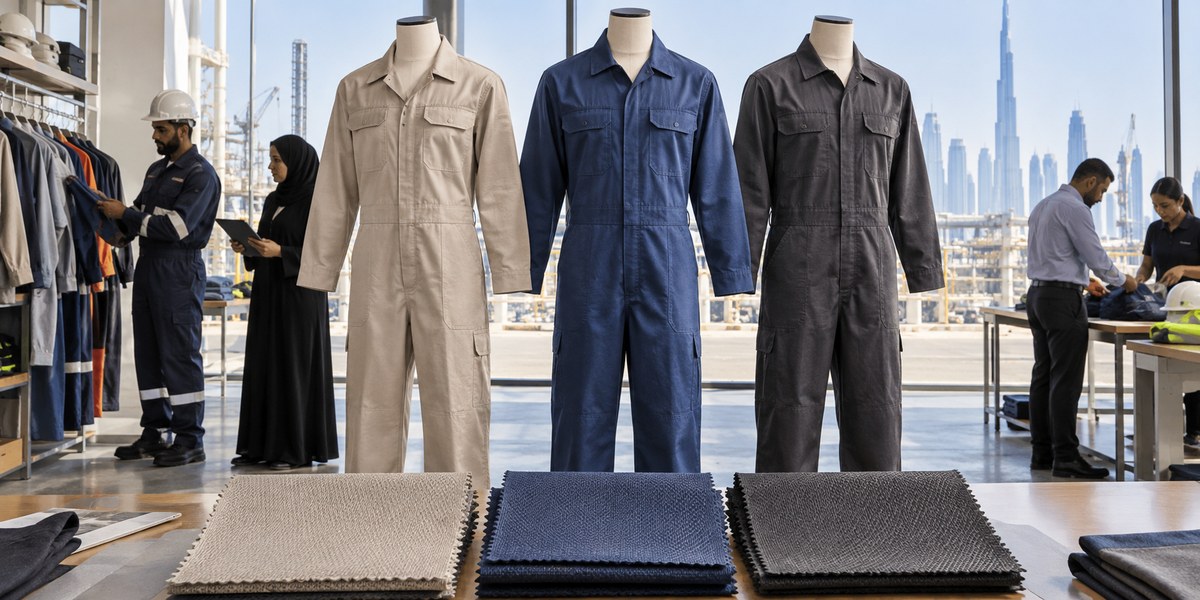
Cotton, polyester and blended coveralls
Cotton is valued for comfort and breathability. Polyester can improve strength, wrinkle resistance, shape retention and drying speed. Blended fabrics are common because they combine useful properties from both fibres.
For many general UAE workwear applications, a polyester-cotton or cotton-polyester twill can be a practical option. Pure cotton may be preferred for some roles, but the correct specification should follow the work environment and any safety standards required by the client or site.
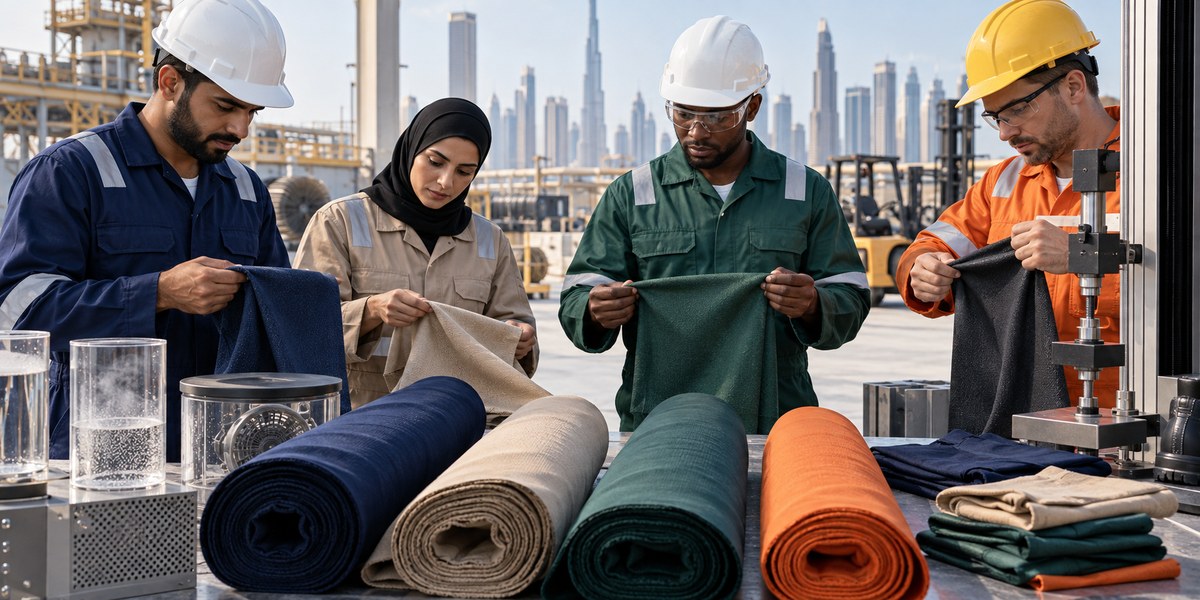
When should you choose reflective tape?
Reflective tape improves visibility, but not every coverall automatically needs it. Construction sites, roadside work, low-light environments and some logistics roles may specify reflective elements. Other indoor roles may not.
Check the project's PPE or uniform standard before ordering. If reflective tape is required, confirm the placement, number of bands and whether a specific standard or certification is expected. Do not assume that any reflective strip makes a garment compliant with every site.

Choose colours for the job and the brand
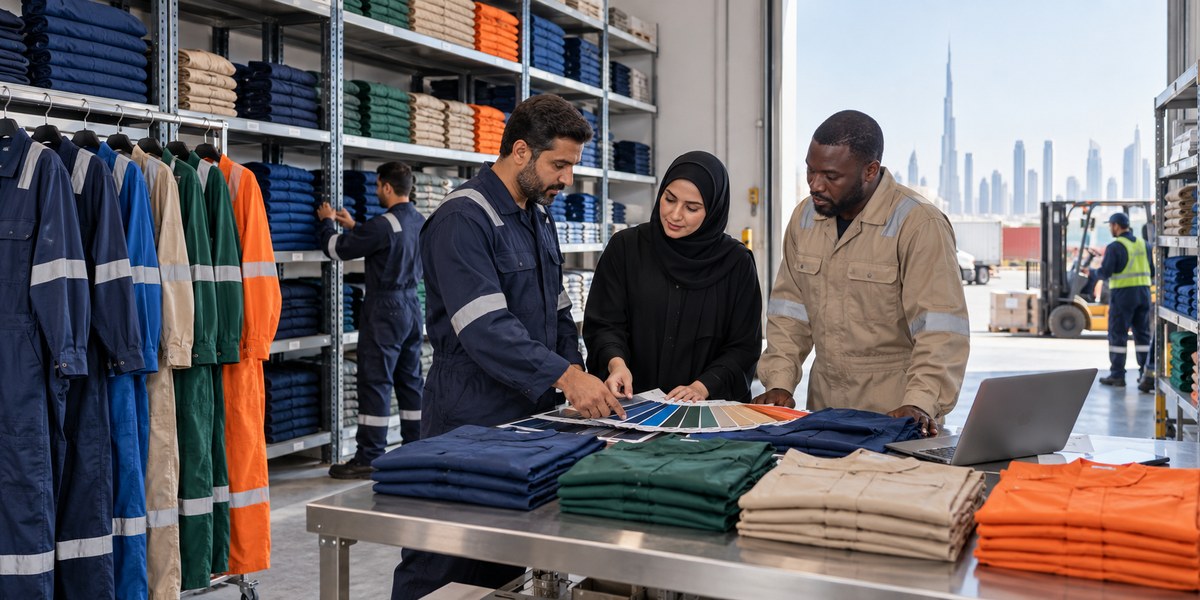
Navy, royal blue, petrol blue, beige and green are common workwear colours. Darker shades can hide dust and stains better, while lighter or brighter colours can make departments easier to identify. Some companies use different colours for technicians, supervisors and general workers.
Before ordering, check whether the same colour will be available for future repeat orders. A one-time shade is difficult to maintain when new staff join months later.

Think about pockets and closure details
A coverall used by a technician may need chest, side and tool pockets, while a cleaner version can suit a supervisor or inspection role. Zippers, snap closures and elasticated waist sections also affect comfort and usability.
Ask for actual garment photos or a sample rather than relying only on a product name. Two coveralls with the same fabric weight can have very different pocket layouts and finishing.

Logo printing and embroidery on coveralls
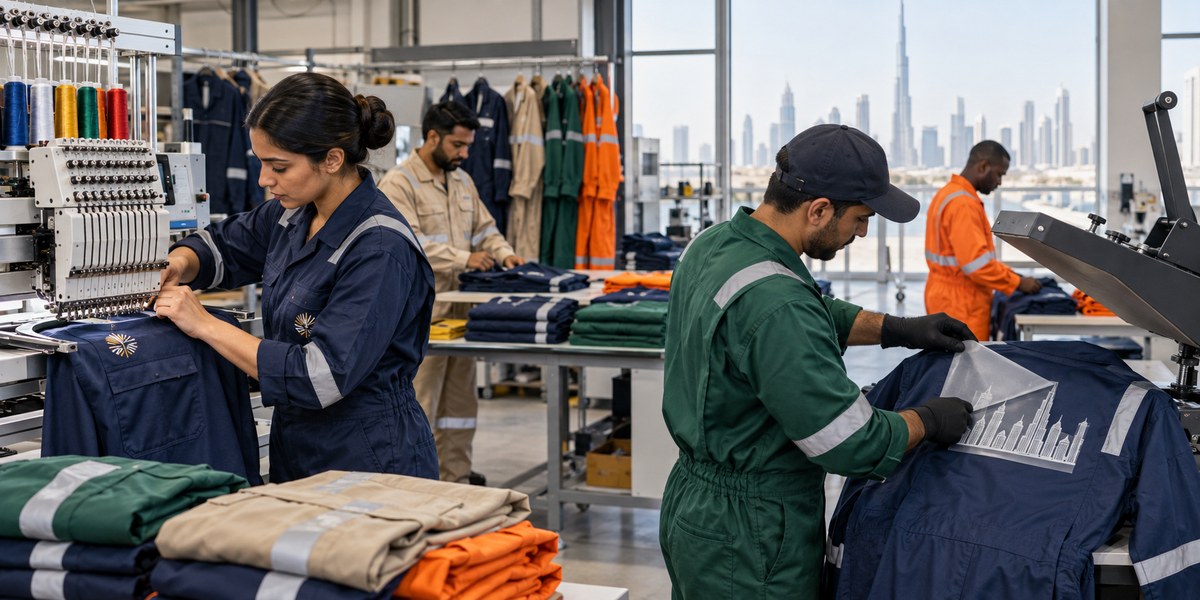
Coveralls can be branded on the chest, back and sometimes sleeves depending on the garment construction. Embroidery creates a durable premium mark for smaller logos. DTF or heat-transfer printing can work well for larger or more detailed designs.
Approve a visual proof before production. The back logo should be large enough to read but should not cross seams or reflective bands unless the placement has been tested.
Always confirm the size range
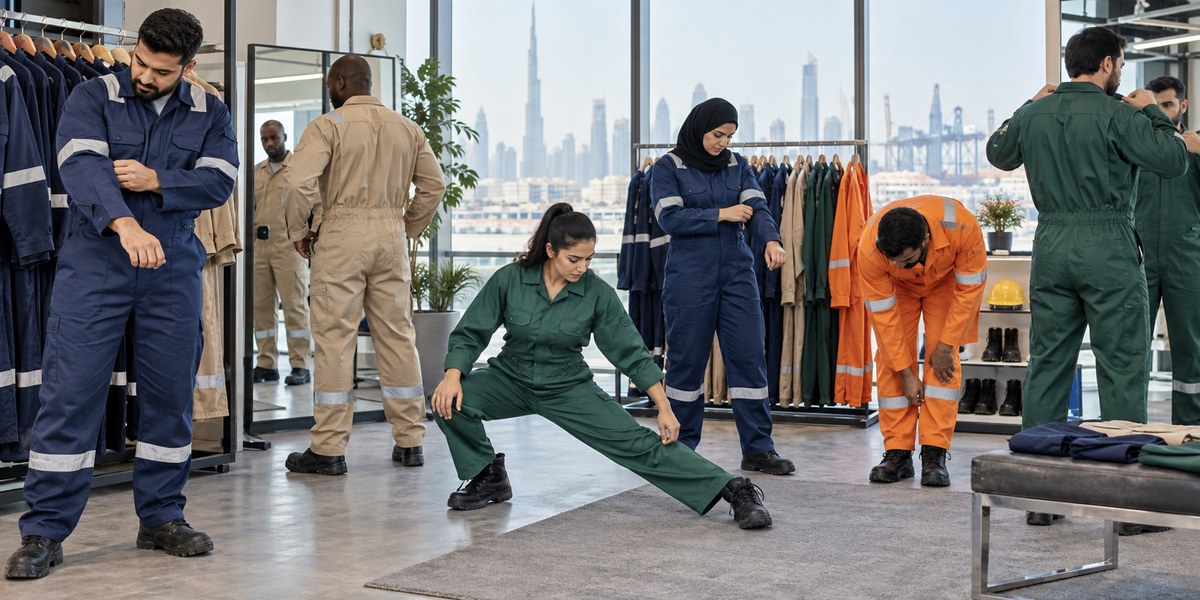
Coveralls need enough room for movement, bending and sometimes clothing underneath. That makes sizing especially important. For a large team, request a size chart or fitting sample and record the final size split before production.
Do not assume a worker's shirt size automatically equals the correct coverall size. Different cuts and suppliers can fit differently.
How to compare coverall quotations
When comparing suppliers, make sure each quote is for the same fabric composition, GSM, colour, reflective requirement, size range and branding. Also check whether VAT, delivery and logo application are included.
If one quote is dramatically cheaper, there is usually a specification difference somewhere. Ask for the details in writing before approving the order.

Plan for repeat orders
Most businesses will need replacements or new employee sizes later. Keep the approved product name, fabric, colour, logo file and print position on record. A supplier who can repeat the same specification is more valuable than one who only wins the first order on price.
Xpertone Creative LLC-FZ can quote workwear based on your required quantity, colour, size mix and logo requirement. For broader uniform planning, see our work uniform supplier guide for Dubai.
Need coveralls or workwear in Dubai?
Send your quantity, preferred fabric or GSM, colour, sizes and logo requirement to Xpertone Creative LLC-FZ.
Frequently asked questions
What GSM is good for a work coverall in the UAE?
There is no single best GSM. Lighter fabrics can improve comfort in hot conditions, while heavier fabrics may improve durability. The job and site specification should decide.
Is cotton or polyester better for coveralls?
Cotton can improve comfort and breathability, while polyester blends can improve durability, drying time and shape retention. Many buyers choose blends to balance both.
Do all construction coveralls need reflective tape?
No. Reflective requirements depend on the worksite, role and risk assessment. Follow the project specification.
Can logos be printed on coveralls?
Yes. Suitable coveralls can usually be printed or embroidered on the chest, back or sometimes sleeves.
Does Xpertone supply coveralls in Dubai?
Yes. Xpertone Creative LLC-FZ supplies workwear from Al Quoz, Dubai, with customization and UAE delivery options.